
Refuges with tent pitches
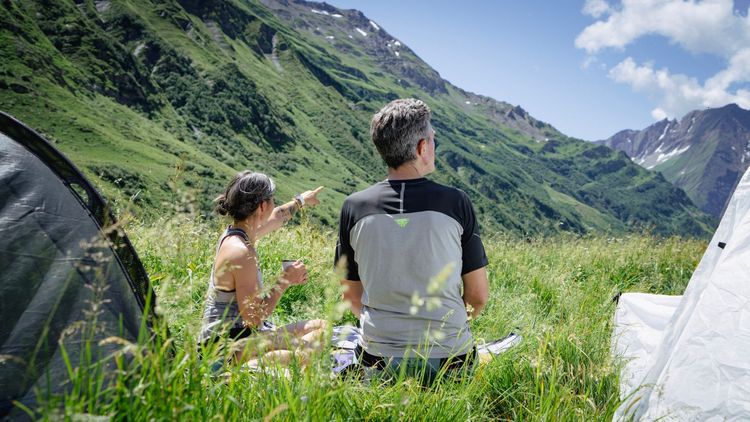
Sleep close to refuges, with access to water, toilets and sometimes food.
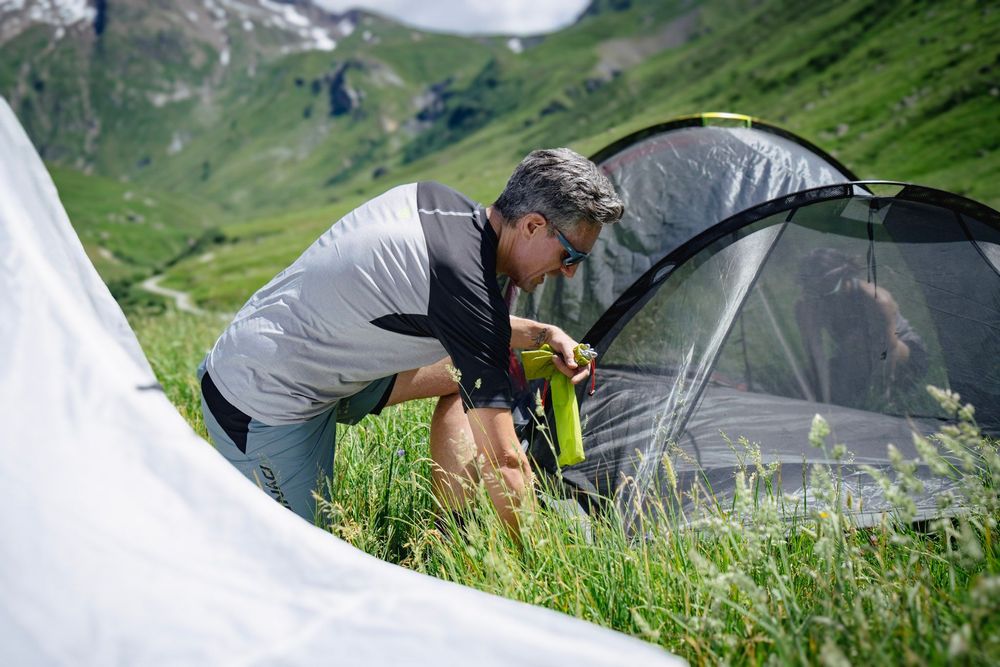
Bivouacking means, above all, taking on a special responsibility towards the mountains: leaving no trace of your passage, taking all your rubbish away, preserving the environment and respecting other users — walkers, shepherds and farmers. Choosing a suitable spot is essential, particularly to avoid sensitive areas and minimise your impact on the natural environment.
Much more demanding, camping is another way to tackle the Tour du Mont-Blanc, but it requires greater self-sufficiency, a heavier rucksack and more complex logistics. You must be prepared to carry your own kit, water and food, and to cope with conditions that can change rapidly.
The TMB passes through several countries, local authorities and protected areas, each with its own regulations. Strict compliance with local rules is essential: before setting off, find out where camping is permitted, any time restrictions and the conditions that must be observed.
Bivouacking means a light, temporary set-up, generally for one night, between sunset and sunrise. Wild camping involves a longer-lasting set-up. On the Tour du Mont-Blanc, this distinction alone does not make bivouacking permitted. Even a tent pitched for a single night can be banned depending on the area.
Always check the local rules.
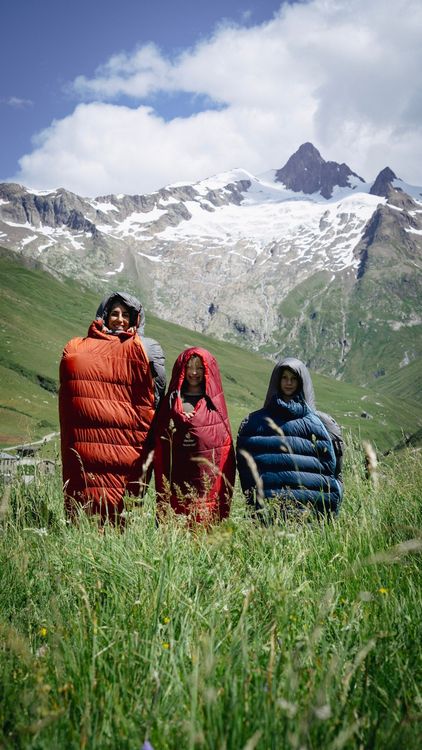
Always choose authorised spots to sleep in a tent. On the Tour du Mont-Blanc, some refuges and dedicated areas allow bivouacking within the rules.
Sleep close to refuges, with access to water, toilets and sometimes food.
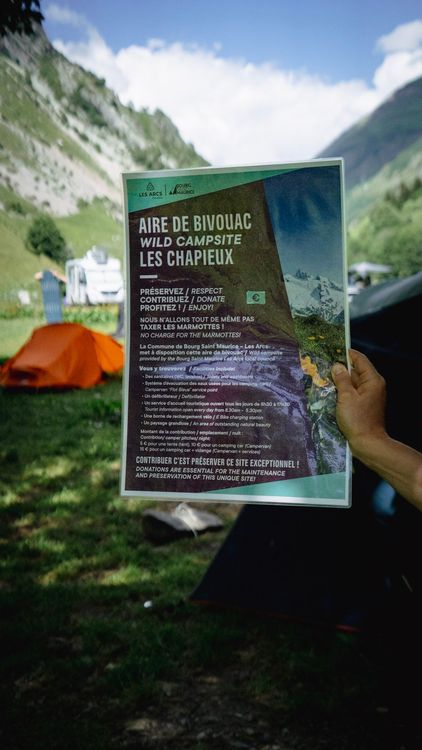
Some areas allow bivouacking under conditions (times of day, altitude, local rules).
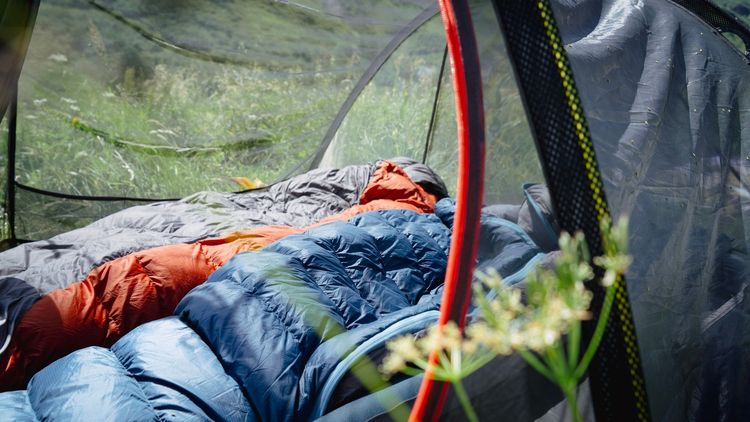
Choose a proper campsite for more comfort and a hassle-free option.
To limit the impact of bivouacking and protect the ground, some areas are strictly regulated. The Mont-Blanc massif is a fragile and heavily visited environment. A poorly chosen bivouac can damage plant life, disturb wildlife and pollute water sources. The rules aim to preserve the balance between nature, local residents and hikers. In particular, they ban sensitive areas such as nature reserves, protected sites and certain municipal zones.
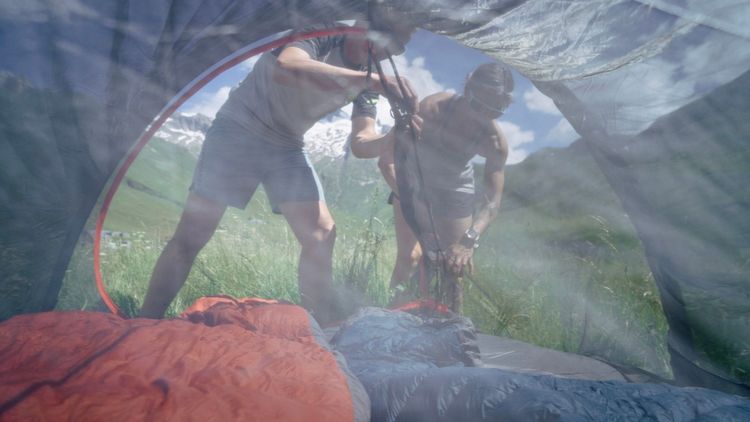
Always check before bivouacking. Bivouac rules vary depending on the countries and municipalities you pass through. On the Tour du Mont-Blanc, it is essential to check the local regulations before each night.
One route, three different sets of regulations.
Chamonix
In the municipality of Chamonix, camping and bivouacking are banned. The only possible exception is high-altitude bivouacking between sunset and sunrise. In addition, bivouacking is strictly banned in certain clearly defined sectors:
In the Aiguilles Rouges massif (map attached), bivouacking for hikers was regulated in 2024 by prefectural order no. DDT-2024-0856, for which renewal was requested in 2025.
You must book your spot on the dedicated website before bivouacking in one of the nature reserves of the Aiguilles Rouges massif (Carlaveyron – Aiguilles Rouges – Vallon de Bérard).
Reminder: swimming in mountain lakes is banned by prefectural order.
Vallorcine
Bivouacking in the municipality of Vallorcine, outside nature reserves, was regulated in 2024 by order no. 34/2024:
Les Houches
In the absence of a specific order (aside from the prefectural order mentioned above, which also covers the Carlaveyron nature reserve), bivouacking is tolerated from sunset to sunrise, for one night.
Saint-Gervais-Les-Bains
Pending a specific order, bivouacking is tolerated from sunset to sunrise, for one night only, and outside private land or high-altitude farms.
Les Contamines
In the municipality of Les Contamines, bivouacking is permitted in dedicated areas, such as the one created at Pont de la Rollaz, as well as in certain zones of the Contamines-Montjoie Nature Reserve, where tents must be taken down every day (pitched after 7 p.m. and taken down before 9 a.m. the following morning).
To protect the habitats and heritage or common species, the following are banned within the perimeter of Lac Jovet and Plan Jovet, as shown on the attached map, except with specific prefectural authorisation:
bivouacking, with or without equipment, from 1 July to 30 August;
swimming and boating on the lakes or waterways, all year round. This ban includes pets swimming, in particular dogs.
However, other areas of the reserve are off-limits to bivouacking, as regulated by order no. 2024-597.
Bourg-Saint-Maurice
As the whole of the Vallée des Glaciers consists of alpine pastures and private property, bivouacking is not permitted there.
All forms of camping are banned across the Aosta Valley, even for periods of under twenty-four hours. Bivouacking is banned below 2,500 m, which covers almost the entire Aosta Valley territory crossed by the Tour du Mont-Blanc.
Failure to comply with the regulations results in a fine of €566.
Bivouacking is generally banned, with a few tightly controlled exceptions (one night, not in groups, above the tree line, or in an emergency).
Some municipalities impose specific rules or ban the practice entirely. In Valais, camping is only permitted in dedicated areas (campsites or official pitches).
In practice: favour campsites or authorised accommodation, particularly at La Fouly, Champex or at Col de la Forclaz.